MATSQUI UNIT 315

Canada and the 2nd South African (Boer) War
The origins of Canada’s tradition of international military service and sacrifice can be traced back to the South African War, fought between 1899 and 1902. This was the first time Canadian soldiers served overseas.
Between 1880 and 1881, the British fought a brief war against the Transvaal Boers in South Africa. The Dutch settlers (“Boers”) rebelled against British control and achieved their independence. British supporters of imperial confederation pushed for greater influence in the Transvaal.
In 1886, gold was discovered in the Orange Free State and the Transvaal Republic, which increased tensions and eventually led to the outbreak of the South African War or ‘Boer War’ on October 11, 1899.
Canadians were divided on whether Canada should fight a war in Africa. Because of political popularity and public pressure, Prime Minister Sir Wilfrid Laurier agreed to send a battalion of volunteers to South Africa.
In the first phase of fighting, the Boers inflicted heavy losses on the British, but were defeated in several key engagements. Refusing to surrender, the Boers turned to a guerrilla war of ambush and retreat.
In the second phase of fighting, Canadians participated in numerous small actions. Harsh conditions ensured that all soldiers struggled against disease and snipers' bullets.
Imperial forces then attempted to deny the Boers food, water and lodging afforded by sympathetic farmers. Britain’s next strategy took the war to the civilian population. Canadian troops burned Boer houses and farms. Civilians were moved to internment camps where an estimated 28,000 prisoners died of disease. This harsh strategy eventually defeated the Boers.
The war also marked the first time Canadian women served with the military overseas.
Sources:
National Army Museum, UK
The Canadian War Museum
2nd South African (Boer) War Veterans

Carter, Frederick Arthur
Sergeant
Royal Berkshire Regiment (UK), 54th Infantry Battalion (Kootenay)
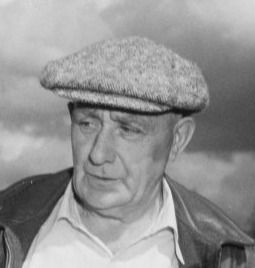
Green, James
Private
2nd Canadian Mounted Rifles?

Timms, Vivian Richard
Private
1st Oxfordshire Light Infantry, UK.
No. 2005391. 6th and 143rd Battalion,

Walker, George Beresford MC, MBE, MSM
Warrant Officer
Royal Army Medical Corps